
Empowering Parents Through Federal Tax Credit Scholarships.
There is a new federal tax credit scholarship program that will expand K-12 educational opportunities to benefit millions of students throughout the nation for years to come.
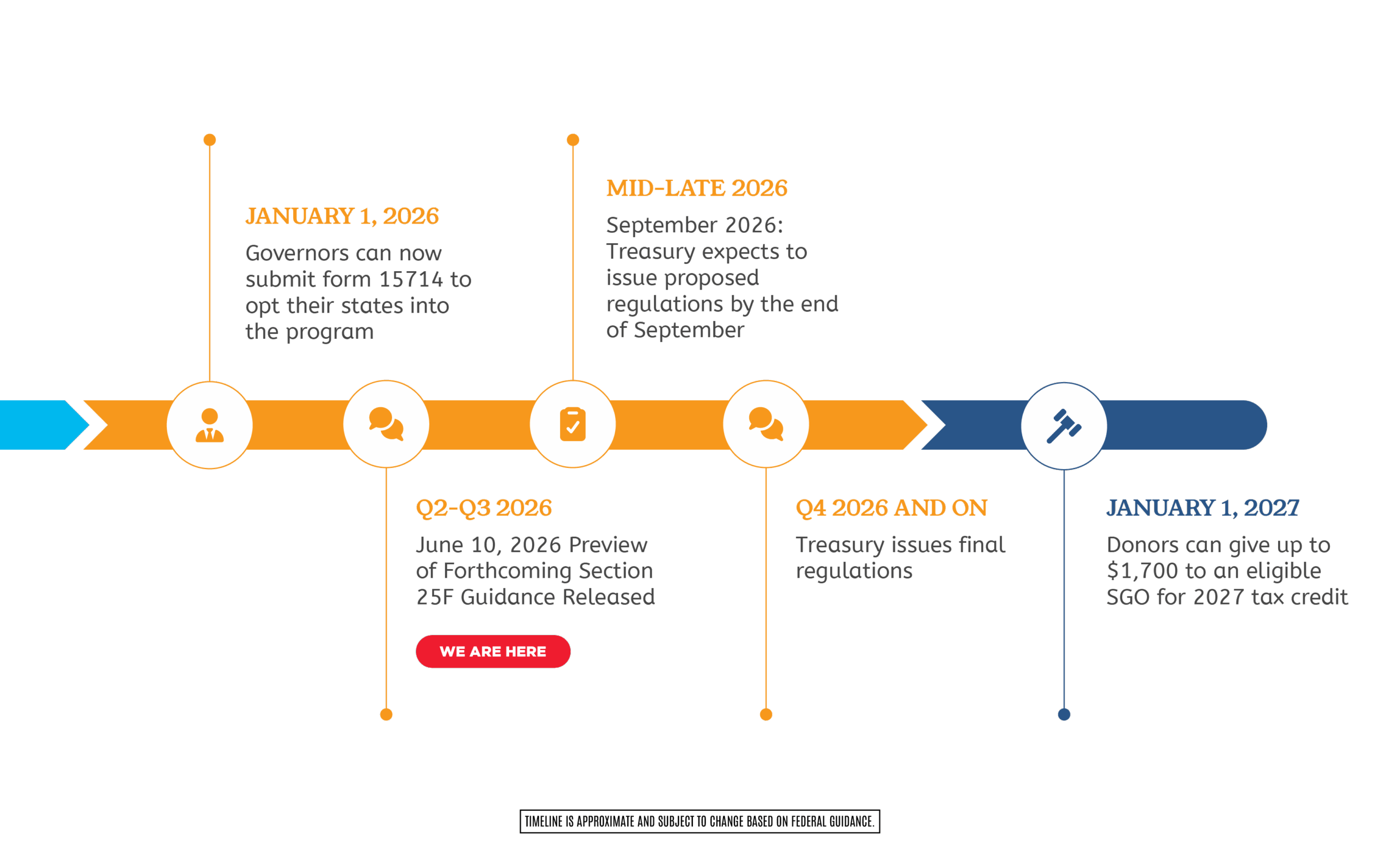
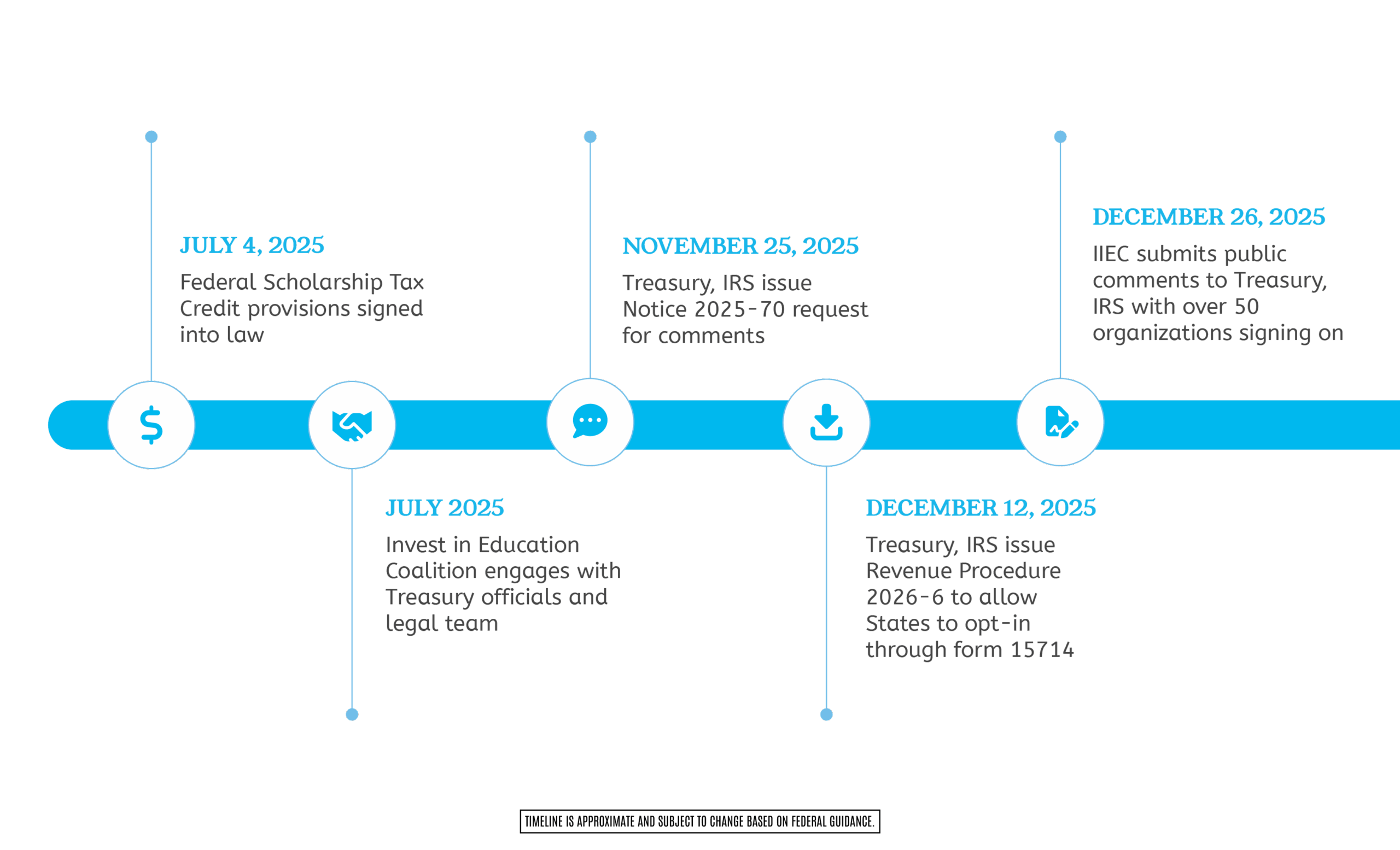
This program was signed into law in July 2025 and will take effect on January 1, 2027. These provisions are now permanently part of the U.S. tax code (section 25F of the Internal Revenue Code). This historic, first of its kind law provides a federal income tax credit for individuals who contribute to scholarship granting organizations (SGOs). These SGOs provide scholarships for eligible students in private and public elementary and secondary schools to access educational opportunities that best meet their needs.
Federal Tax Credit Scholarship Program Implementation Timeline
Key Provisions & Impact
$1,700 Per Taxpayer
Uncapped 100% non-refundable federal tax credit for contributions to scholarship granting organizations (SGOs).
Private Donations
A tax incentive that generates private donations from any individual who owes federal income tax.
Qualified Education Expenses
Scholarships can be used for tuition, tutoring, special needs services, education technology, supplies, and more.
Scholarship Eligibility
Students from households earning up to 300 percent of regional median family income may be eligible, covering a significant majority of K–12 students nationwide.
Millions of Students
Will directly empower parents of millions of students to choose the best school or education service.
50 States
Makes school choice available to students in all 50 states with the opt-in decision from the Governor.
Expand Access
Scholarships help eligible students access educational opportunities that best meet their needs and complements existing state programs.
State Opt-In Status
The federal tax credit scholarship law requires each state’s governor or designated officer or agency pursuant to state law to voluntarily elect whether this law takes effect in their respective state, informally known as the “opt-in” provision. The map below describes the opt-in status of each state.
Select a state to learn more about opportunities for students K-12.

Opt-in States
Intent to Opt-in
Content will be populated from map interactions
Resource Categories
Families
Get eligibility info, application steps and answers to common questions.
Resources for Families
Find out if you qualify, learn how to apply, and get answers for your family.
Donors
See donation steps, tax credit rules, and impact stories.
Resources for Donors
Learn how the tax credit works and how your support helps students.
SGO’s
Get qualified, download compliance guides, and find key reporting tools.
Resources for SGO’s
Access application info, compliance checklists, and best practices.
Tax Professionals
See federal credit rules, documentation checklists, and SGO lists.
Resources for Tax Professionals
Find guidance, sample forms, and qualified SGO information.
Frequently Asked Questions
Get answers to common questions about school choice and our resources
General
How does the tax credit work?
Individual donors make contributions to qualified SGOs. In return, they receive a dollar for dollar federal tax credit. Qualified SGOs then award scholarships to eligible K–12 students for qualified educational expenses.
Who are the qualified SGOs in my state?
Governors of each state, or the individual or entity designated by state law, voluntarily decide if the federal tax credit scholarship law can take effect in their respective state, known as the “opt-in” provision. If a state opts in, it is required to provide an annual list to the U.S. Department of the Treasury of qualified SGOs operating in their state that meet the requirements of the federal law. Once listed, the SGO may receive qualified contributions from a taxpayer who in turn can receive the federal income tax credit. This guidance has not been released by the U.S. Department of the Treasury and is forthcoming in 2026.
For Parents
Who qualifies for a scholarship?
Students from households earning up to 300% median family income as determined by HUD are eligible.
What can scholarships be used for?
Scholarships can be used for private, public and charter schools including school tuition and fees, tutoring, curriculum, special education services, and other qualified education expenses as allowed by existing Coverdell Savings Accounts under federal law.
Who are the qualified SGOs in my state?
Governors of each state, or the individual or entity designated by state law, are required to provide an annual list to the U.S. Department of the Treasury of qualified SGOs operating in their state, once designated they are eligible to receive tax-credited donations. This guidance has not been released by the U.S. Department of the Treasury and is forthcoming in 2026.
How much can a student receive?
The scholarship award amount is determined by the SGO.
For Donors
What is the donor benefit?
Donors receive a dollar-for-dollar, non-refundable federal tax credit.
For Tax Professionals
How much is the tax credit?
Eligible donors may claim a non-refundable credit of up to $1,700 per year against their federal individual income taxes for contributions to qualified SGOs.
What information do I need from my client to claim the credit?
This guidance has not been released by the U.S. Department of the Treasury and is forthcoming in 2026.
Invest in Education Foundation believes that financial limitations should not stand in the way of a high quality education for children in K-12 education.